
This article first appeared in Yankee Brew News.
What does it actually take to collaborate on a beer? Who picks the style? Who pays for the ingredients? And how do two breweries with completely different brands agree on a name?
JP Gallagher, co-owner of Lost Shoe Brewing Company in Marlborough, Massachusetts and president of the Massachusetts Brewers Guild, has done dozens of collaborations; in fact, since 2019, Lost Shoe has had a hand in 80+ beers. He was the perfect person to offer some clarity on the nuts and bolts of brewery collaboration.
How did your most recent collaborations come about?
The brewery matchmaker program through the Massachusetts Brewers Guild. If you were interested in participating, you could submit your name and brewery, then you would get matched up, making sure that the breweries have not already collaborated on a beer in the past, but also not in the same region so they got out of their areas, go to each other’s production area. Make the connection over email, take it from here. She gave a little bit of guidance on timeframe to make sure we were all releasing at the same time, but styles, etc. it was up to the breweries to decide what they wanted to make. We did a fruited sour with Rockport because we wanted to do a style that people get excited about, and it gave us a creative freedom to get a little crazy.
How do you decide on the collaboration recipe?
Every scenario is different; every personality is different. Some breweries really get into the nitty-gritty of how it’s made, or how you make it vs how they make it. Other people are like ‘I know you know how to make beer, let’s just decide on style, hops, ingredients, but I don’t need to know the super fine details on everything.’
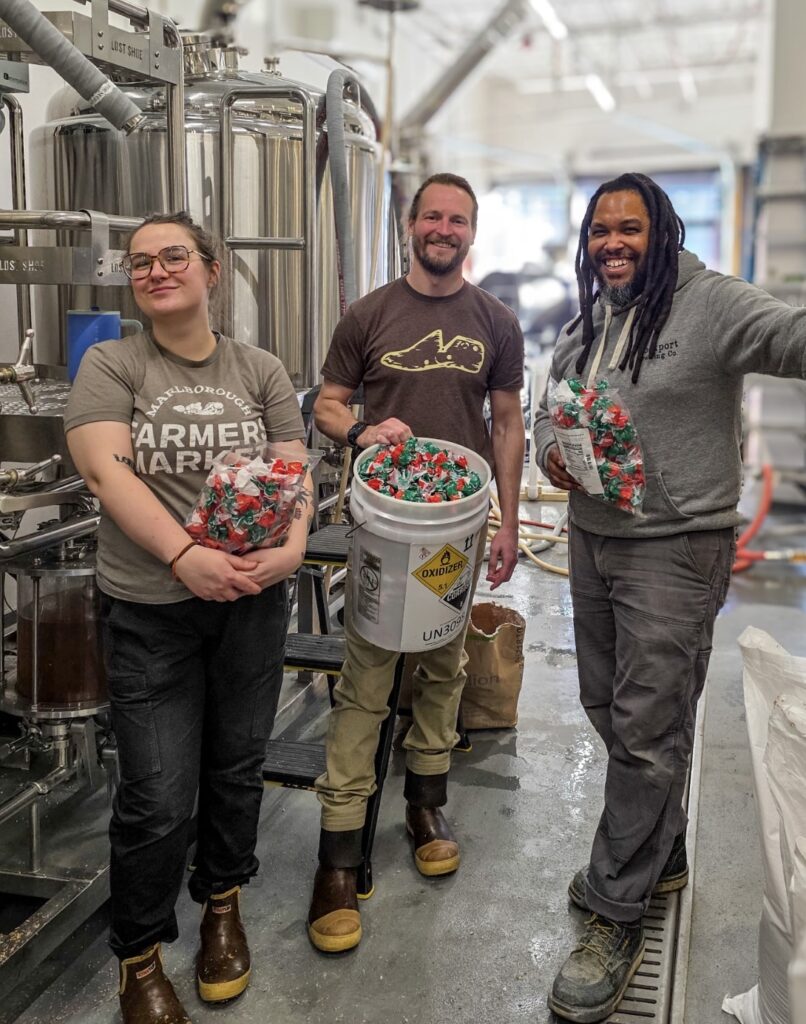
For the Lost Shoe collaboration with Rockport Brewing Co.: We make sours quite a bit at Lost Shoe and it was more like ‘This is how we make sours,’ and Julian Miller at Rockport said ‘That looks great.’ There was no ‘Have you thought about doing this instead?’ The creative collaboration aspect for that beer happened when we were deciding what to add to the base recipe, all the fruits and strawberry candies. He and I had our fruit suppliers up and went through the different options available and what jumped out.
For the collaboration with Twisted Fate, Dirigible and Time & Materials for Mass Craft Brewer Fest: The recipe process was that we decided to all do hazy IPA because it’s a popular style. We sat down after a meetup and talked about base recipes, using Pilsner or pale malt, add 30% flaked oats, and then threw around ideas of what to do in the whirlpool. Galaxy is a hop that was popular a few years ago, crops weren’t good for a couple of years, but now they are good again. That was the base that all four breweries used, but as far as dry hop goes, it was fair game. That beer, we made at our own breweries.
Speaking of location, how do you decide on where to brew the collaborative beer?
For the one with Rockport, we did it at our location since Rockport is still building out their new brewery. But it comes down to scheduling: first question is: hey, do you want to make a beer? The second: your place or ours based on scheduling and availability.
Do you split the cost of ingredients? What about profits?
In this case with Rockport, we split the cost for the ingredients, but that’s not always the case. Not every collab is interested in doing that; maybe they don’t have the draft lines, or it’s more ‘we’re happy to just hang out.’ But in this instance, Rockport was interested in selling it at their taproom, so we did a cost of the ingredient wholesale to them. We canned them as well. There was no concern about splitting profits.
What about deciding on a name for the collaborative beer?
Sometimes the hardest part is coming up with the name! With collabs, the challenge is to find the cross section between two different brands. Sometimes it’s easy, but in other instances, your branding couldn’t be any more different. So, you start thinking: how do we tie in our name or core beer names, or maybe city or town they are from? For the four-brewery collaboration where we were all making Hazy IPAs, we decided on Choose Your Own Adventure.
What do you personally love about collaborations?
They are exciting in themselves because you’re getting two or more breweries involved and you’re branching out into each other’s base. At Rockport, people who are their regulars might come to try the collab or think ‘hey I’ve been meaning to check [Lost Shoe] out’ and they come for that.” That’s probably one of the best reasons for collabs, outside of just making beer with people you respect or you get along with. It’s not a heavy lift for the visiting brewery; you’re not going to come in and automatically know how the house works. You also don’t see collabs in other industries, which is special. It’s one of my favorite things about working in beer.
With a collab, not every beer that gets made has to be something unique and different; maybe it’s a style that you’ve never done before, which can be just as exciting. It’s a great reminder that brewing is ultimately creative.